

Silsila
Silsila — Arabic for “chain” or “link” — is a multimedia project developed over seven years through the deserts and endangered water sources of the Middle East, North Africa, the Maldives, and Hawaiʻi. Through photography, video, and installation, Alshaibi follows the story of water and desert as a way to think about displacement in an era of ecological crisis.
The project was inspired in part by the journeys of the fourteenth-century Moroccan traveler Ibn Battuta. Alshaibi loosely followed his historic routes through the present-day Middle East and North Africa and beyond. But where Ibn Battuta moved by choice, Silsila turns toward those for whom movement is forced. The work speaks to refugees, displaced communities, and those facing future uprooting through water scarcity and rising seas.
In Silsila, landscape is not a backdrop. Desert and water become active forces that hold memory, danger, survival, and connection. The recurring figure in the work moves through these spaces as a seeker and a witness. Her presence links the body to the land and makes visible the fragile relationship between human life and the natural world.
The project draws on the visual and philosophical traditions of Islamic art and Sufism. Its use of saturated color, symmetry, pattern, and spiritually evocative titles points to ideas of lineage, transmission, and interdependence. Titles such as Wasl (Union), Al-Tariqah (The Path), and Silsila suggest a chain of relation across bodies, places, histories, and futures.
Silsila asks what it means to recognize our shared vulnerability before ecological collapse. It is a project about the climate refugee before that condition has fully arrived, and about the search for connection in the face of an increasingly uncertain future.
Silsila
2009–2017
Photography, video, and installation
42 photographs: digital archival prints and chromogenic prints mounted to Diasec
8 videos: projected or presented in custom black Plexiglas boxes
Published as the monograph Sama Alshaibi: Sand Rushes In by Aperture Foundation in 2015.

Silsila, 2014

Al-Ṭarīqah (The path), 2014

Shaṭṭ al-Jarīd (Lake of Jerid), 2011

Rās Abū Galūm, 2011

Fātnis al-Jazīrah (Fantasy Island), 2014

Tasma‛ (Listen), 2014

Al-Rahhālah (The wanderer), 2012

Dār al-Islām (Abode of Islam), 2014

Sabkhat al-Milḥ (Salt flats), 2014

Taʾshīr (Marking), 2010
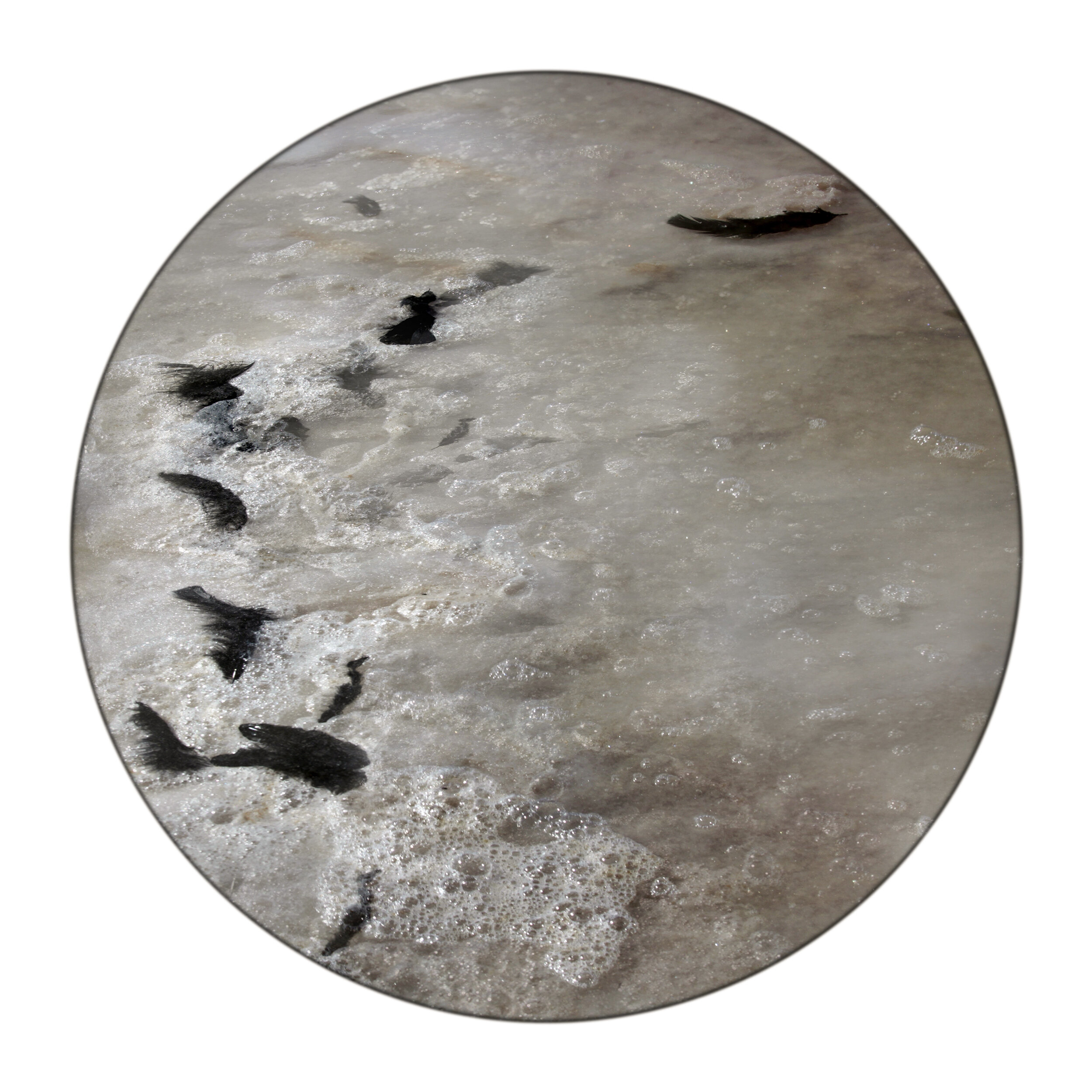
Wa-Tajtamiʿ al-Tuyūr (And the birds confer), 2014
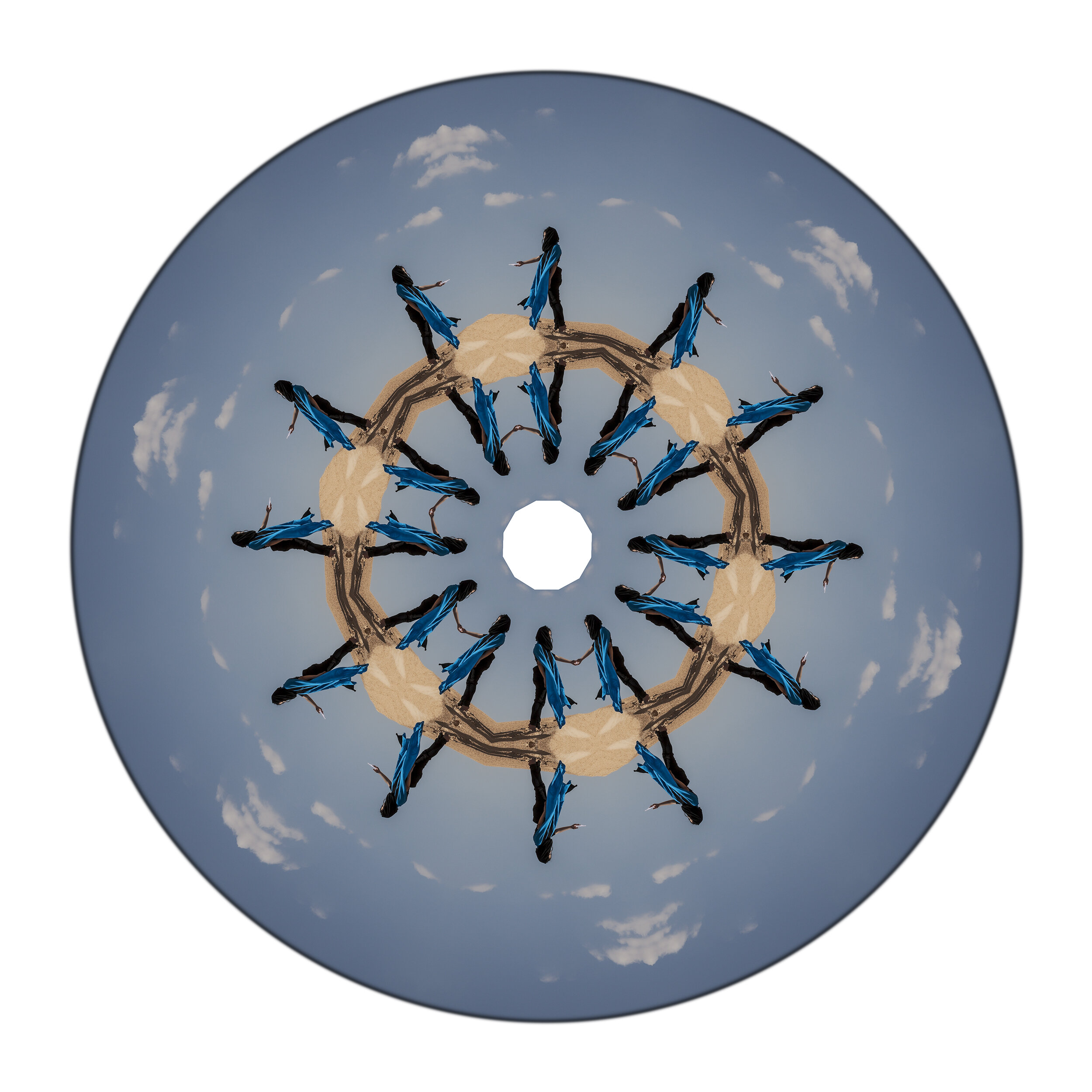
Mā Ijtamaʿt Aydīnā ʿalā Qabḍah illā wa-Kānat Muʿaṭṭalah (What our hands joined was broken), 2014

Jarasun Yaqraʿ li-l-Mawt (Death knell), 2010

Mu’allaqāt (Suspended), 2009

Al-Maʿnā al-Thālith (The third meaning), 2014

Iṣrār (Persistence), 2010

L’Invasion de la Mer (Invasion of the sea), 2011

Tajammud al-Zamān (Freezing of time), 2014

Mare Mecca (Sea of Mecca), 2014

Al-Ṣaḥrāʾ al-Bayḍāʾ (The White Desert), 2011

Al-Rubʿ al-Khālī (The Empty Quarter), 2014

Murūr (Passing), 2010

Yamkuth (Remains), 2014

Mā Bayn al-Mahallayn Khidā, (The Lie Between), 2016

Siḥr Ḥalāl (Permissible magic), 2014

Wādī al-Naṭrūn (Natron Valley), 2011

Tarakūnā Narghab bi-l-Mazīd (They left us wanting), 2014
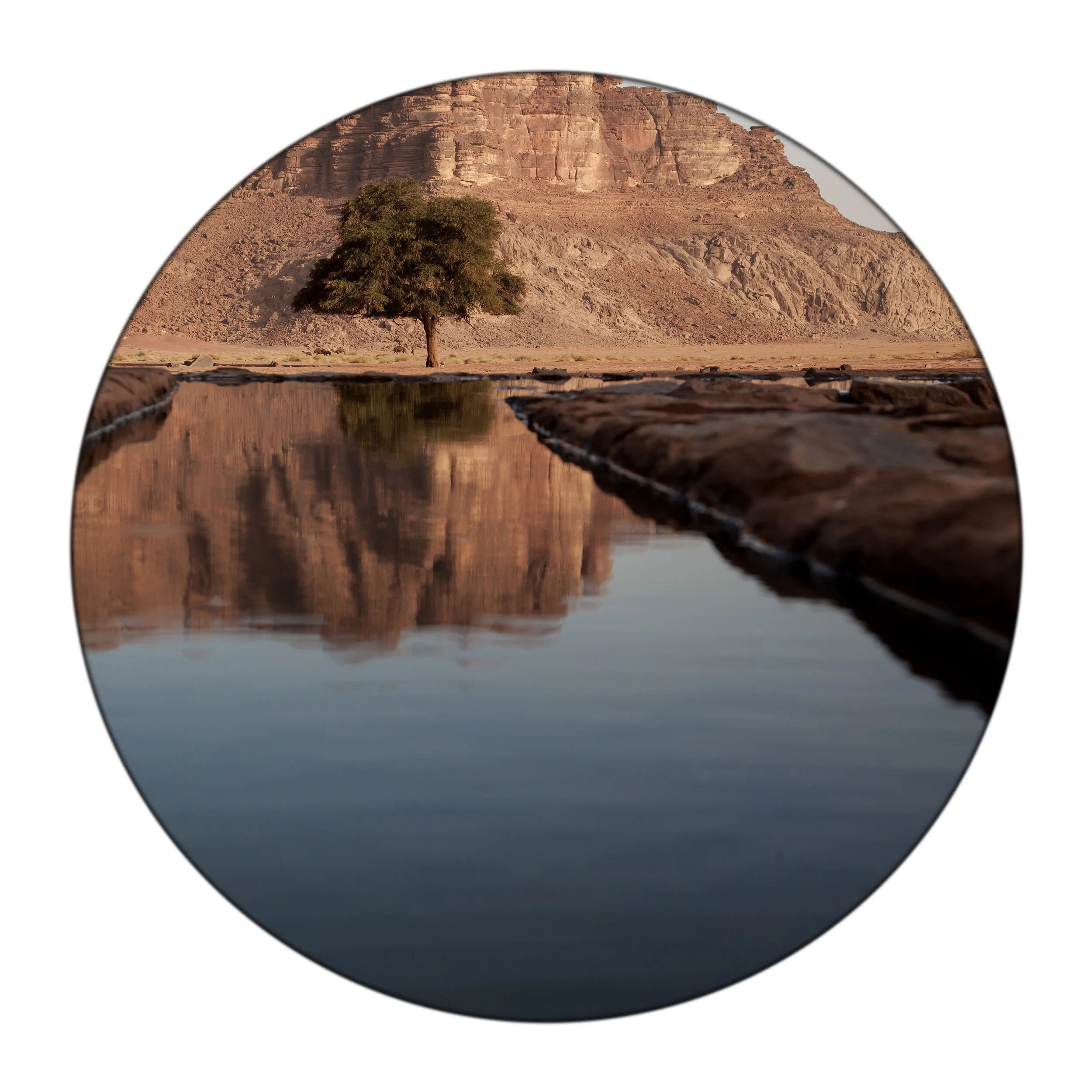
Qaṣīdat al-Jannah (The poem of practice), 2012
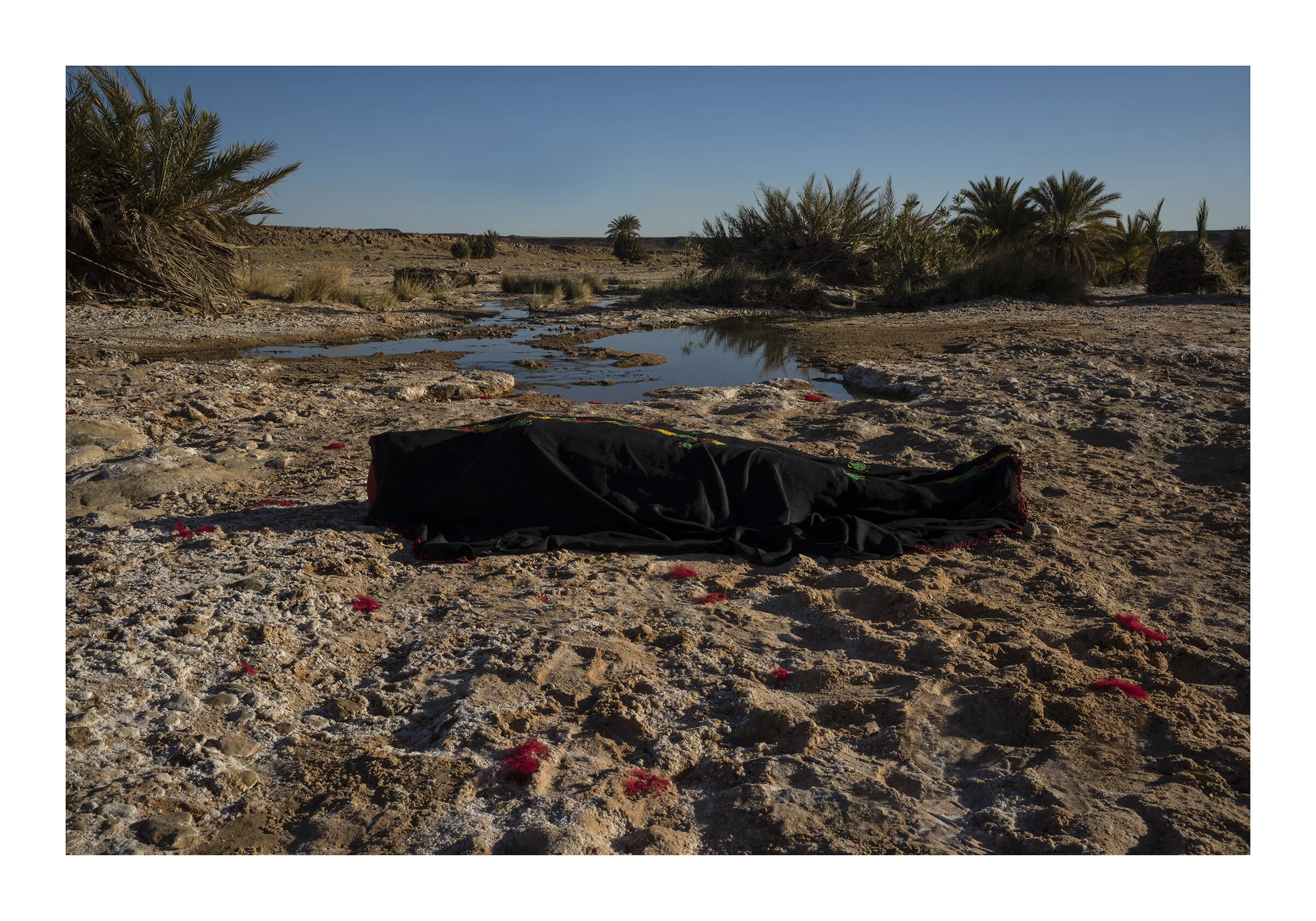
Idhā Intahā Thumma Yabtadi’ (If Over and Then Begins), 2016
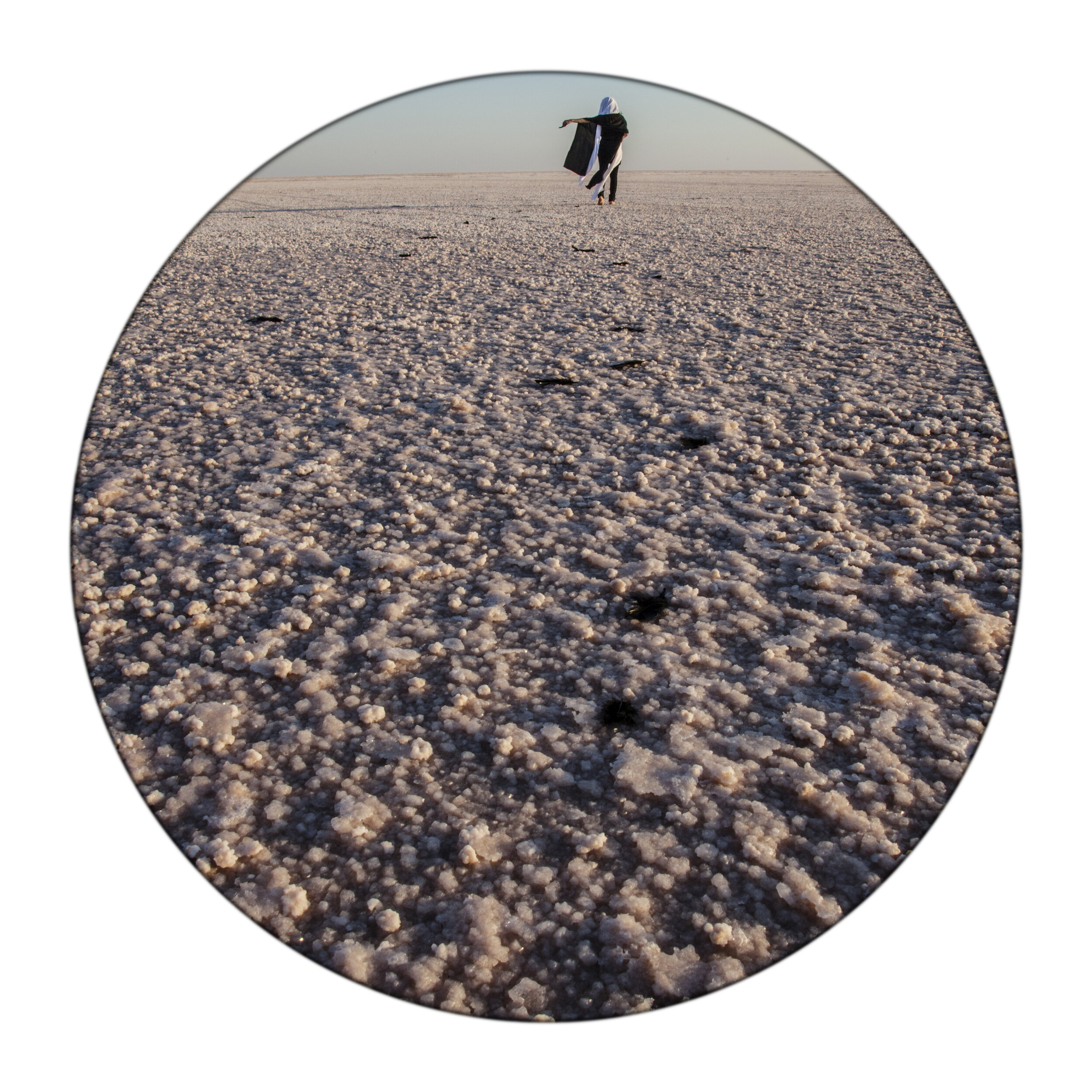
Al-Jawāhir (The jewels), 2014

Wādī al- Qamar (Valley of the moon), 2012
“Sama Alshaibi uses photography to situate her performance art, which is independent of an audience, and that performance—an abstract manifestation of her personal and intimate experiences—gives a new dimension to her artistic practice. Unlike the fourteenth-century Moroccan traveler Ibn Battuta, who is often referenced in Silsila, Alshaibi does not document the moment but rather lives it, in order to become one with a landscape threatened by ecological disasters. There are hardly any living beings in her images; instead, traces of life—the fruits of paradise, such as pomegranate seeds and dates, and the white feathers of birds—lend her images a spiritual and meditative quality that she shares with the viewer.”
Salwa Mikdadi, excerpt from “Silsila: A Desert Ritual and Spiritual Performance Independent of an Audience”, Sama Alshaibi: Sand Rushes In)
Video excerpt — from Silsila
Video excerpt — from Silsila


