
Silsila
Silsila — Arabic for ‘chain’ or ‘link’— is a multi-media project depicting Alshaibi’s seven year cyclic journey through the significant deserts and endangered water sources of the Middle East and North African region. Through this body of work, the artist examines connections between different cultures that are under threat of displacement, recognizing shared global issues that need to be addressed. Inspired by the great 14th century Moroccan traveler Ibn Battuta, Alshaibi loosely followed his ancient paths through the present-day Middle East and North Africa, to the islands of the Maldives in the Indian Ocean, a nation slated to be the first to “disappear” by rising tides, and onto Hawaii in the Pacific Ocean, another island on the brink of extinction with. Alshaibi establishes that this recognition of geological interconnectedness and human interdependence is essential to addressing environmental issues. According to the artist, the story of water and desert is an enduring paradox and starting point for broader and philosophical readings that place mystical and historical importance on the natural world and point to our uncertain ecological future.
42 photographs (digital archival prints and c-prints mounted to Diasec) and 8 videos (either projected or "floating" in custom-made black Plexi boxes). 2009-2017.

Silsila, 2014

Al-Ṭarīqah (The path), 2014

Shaṭṭ al-Jarīd (Lake of Jerid), 2011

Rās Abū Galūm, 2011

Fātnis al-Jazīrah (Fantasy Island), 2014

Tasma‛ (Listen), 2014

Al-Rahhālah (The wanderer), 2012

Dār al-Islām (Abode of Islam), 2014

Sabkhat al-Milḥ (Salt flats), 2014

Taʾshīr (Marking), 2010
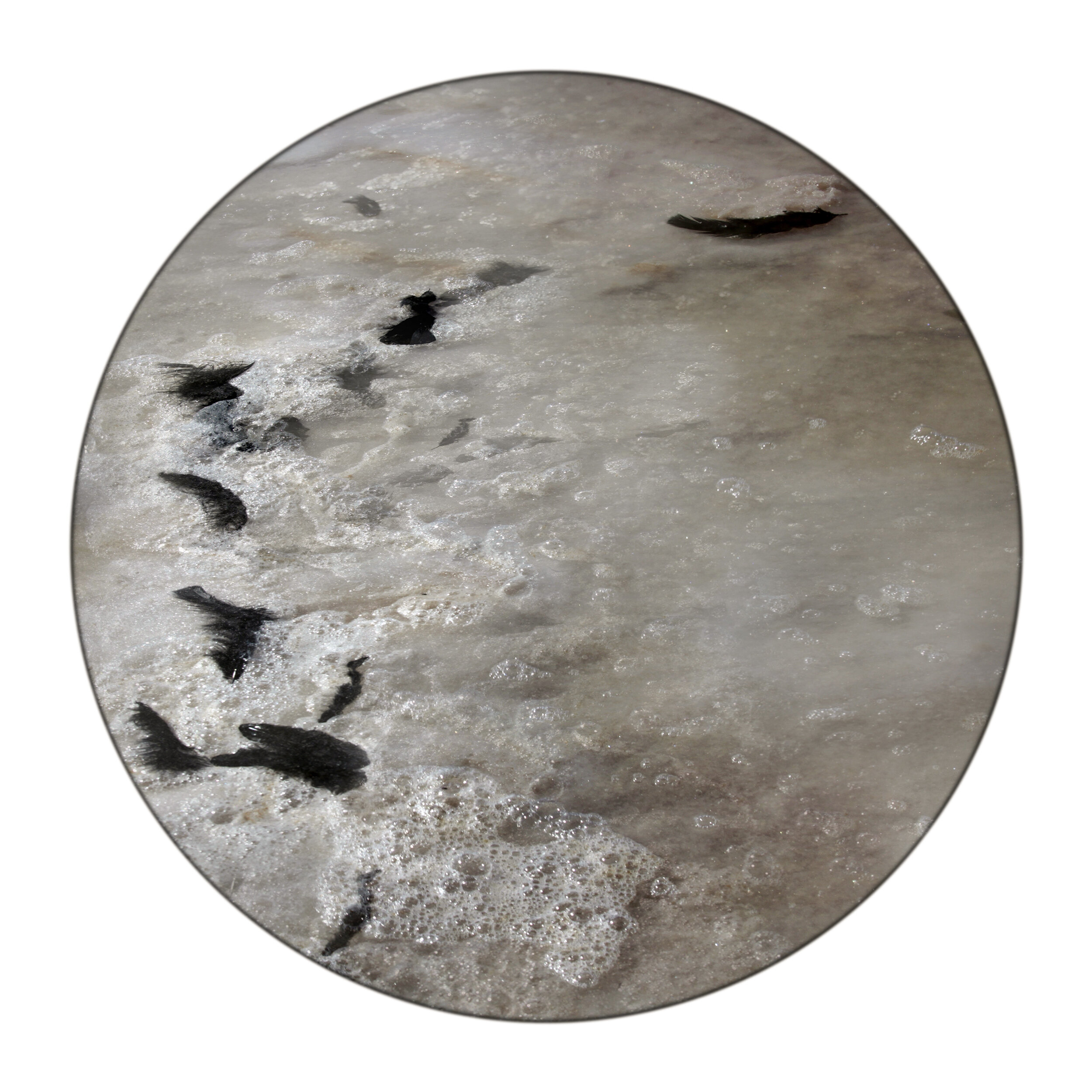
Wa-Tajtamiʿ al-Tuyūr (And the birds confer), 2014
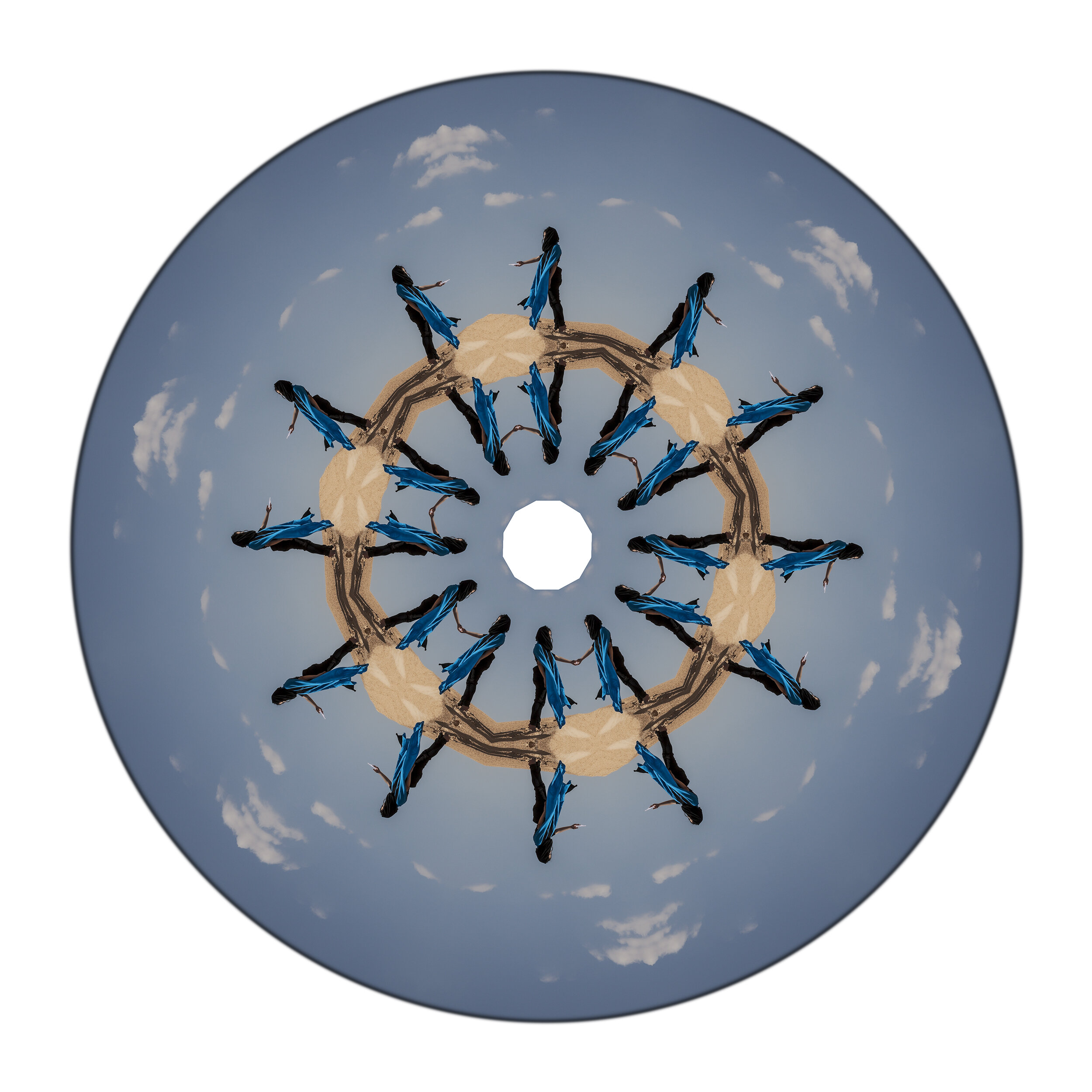
Mā Ijtamaʿt Aydīnā ʿalā Qabḍah illā wa-Kānat Muʿaṭṭalah (What our hands joined was broken), 2014

Jarasun Yaqraʿ li-l-Mawt (Death knell), 2010

Mu’allaqāt (Suspended), 2009

Al-Maʿnā al-Thālith (The third meaning), 2014

Iṣrār (Persistence), 2010

L’Invasion de la Mer (Invasion of the sea), 2011

Tajammud al-Zamān (Freezing of time), 2014

Mare Mecca (Sea of Mecca), 2014

Al-Ṣaḥrāʾ al-Bayḍāʾ (The White Desert), 2011

Al-Rubʿ al-Khālī (The Empty Quarter), 2014

Murūr (Passing), 2010

Yamkuth (Remains), 2014

Mā Bayn al-Mahallayn Khidā, (The Lie Between), 2016

Siḥr Ḥalāl (Permissible magic), 2014

Wādī al-Naṭrūn (Natron Valley), 2011

Tarakūnā Narghab bi-l-Mazīd (They left us wanting), 2014
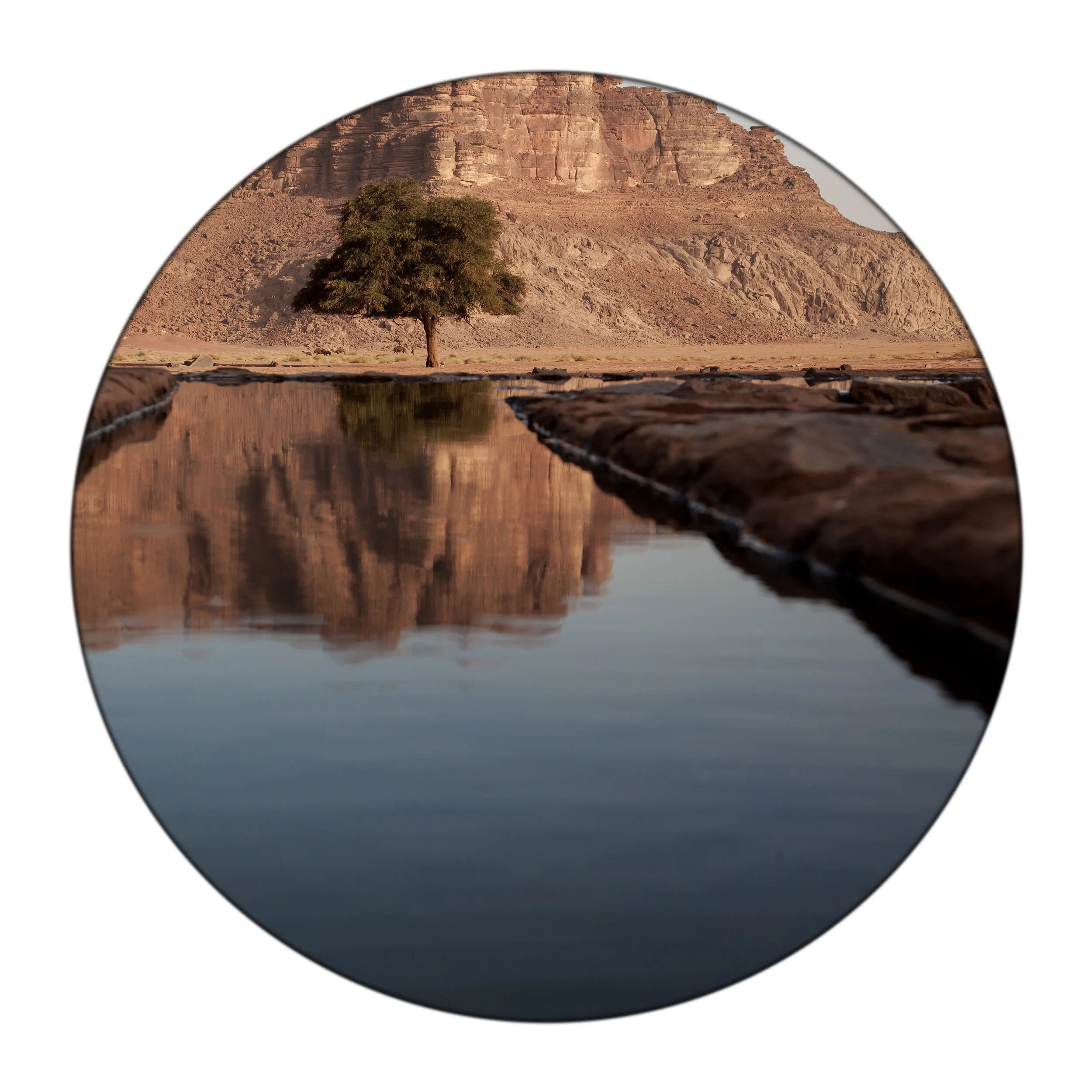
Qaṣīdat al-Jannah (The poem of practice), 2012
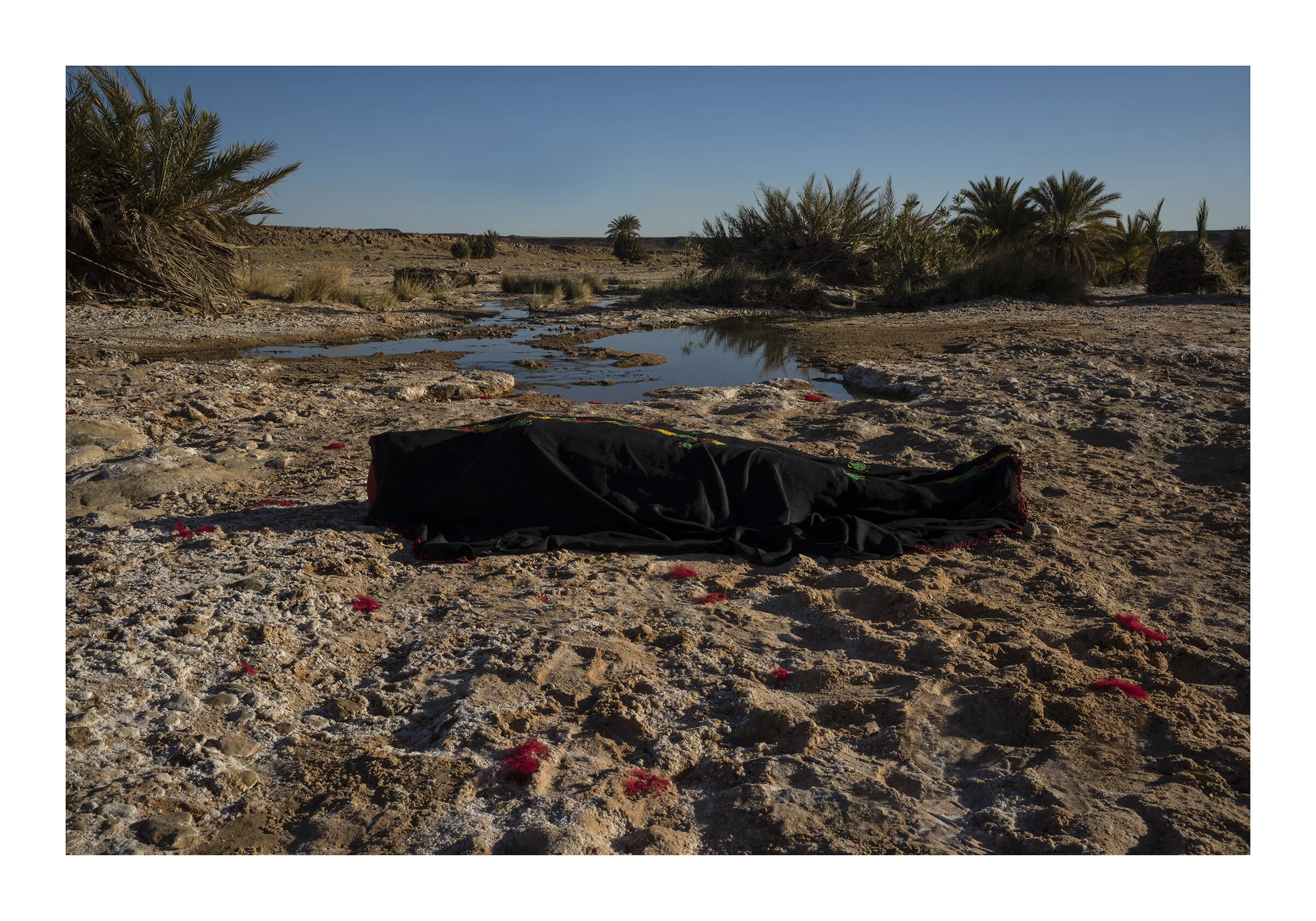
Idhā Intahā Thumma Yabtadi’ (If Over and Then Begins), 2016
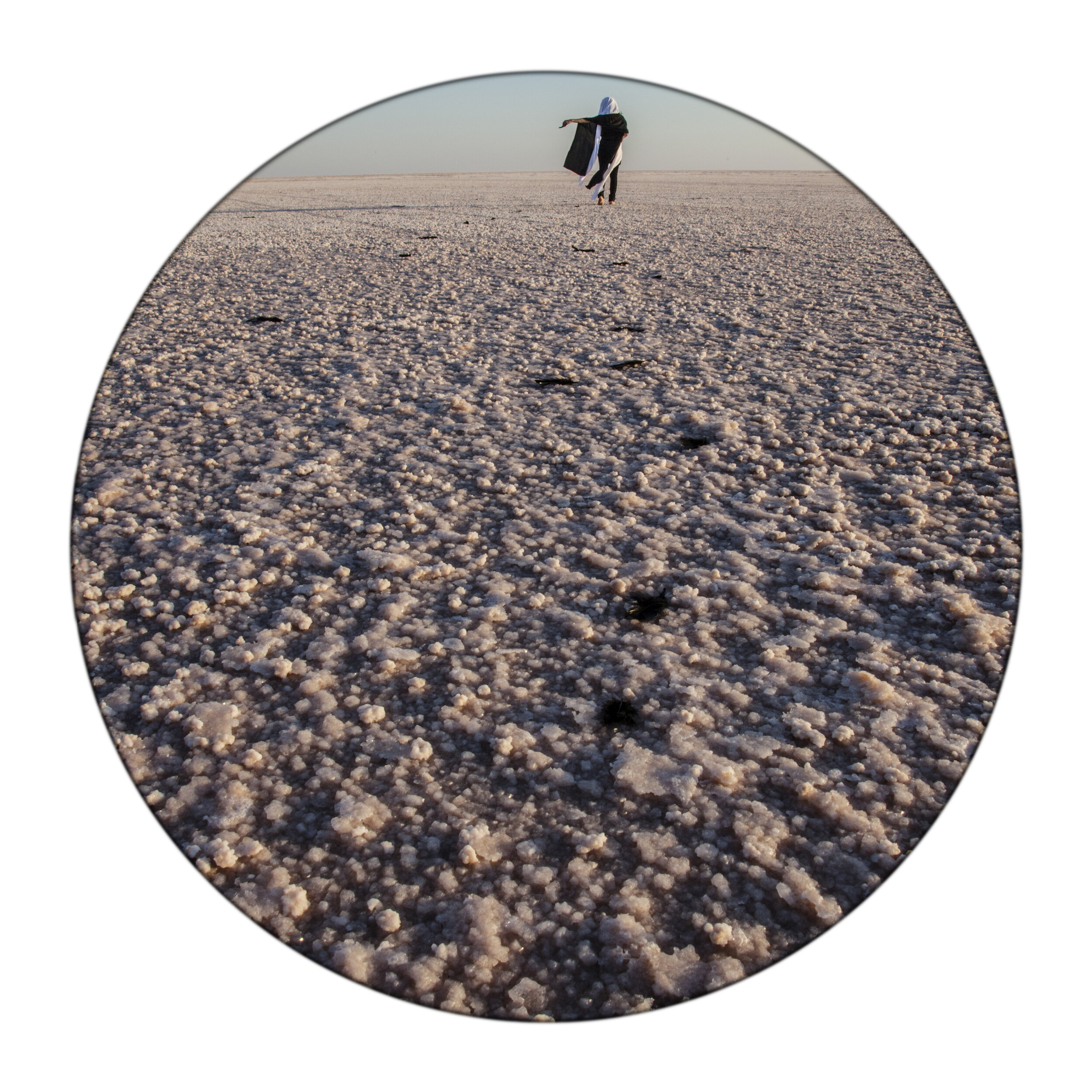
Al-Jawāhir (The jewels), 2014

Wādī al- Qamar (Valley of the moon), 2012
“Sama Alshaibi uses photography to situate her performance art, which is independent of an audience, and that performance—an abstract manifestation of her personal and intimate experiences—gives a new dimension to her artistic practice. Unlike the fourteenth-century Moroccan traveler Ibn Battuta, who is often referenced in Silsila, Alshaibi does not document the moment but rather lives it, in order to become one with a landscape threatened by ecological disasters. There are hardly any living beings in her images; instead, traces of life—the fruits of paradise, such as pomegranate seeds and dates, and the white feathers of birds—lend her images a spiritual and meditative quality that she shares with the viewer.”
Salwa Mikdadi, excerpt from “Silsila: A Desert Ritual and Spiritual Performance Independent of an Audience”, Sama Alshaibi: Sand Rushes In)
Video excerpt — from Silsila
Video excerpt — from Silsila


